Assembly-first geometry
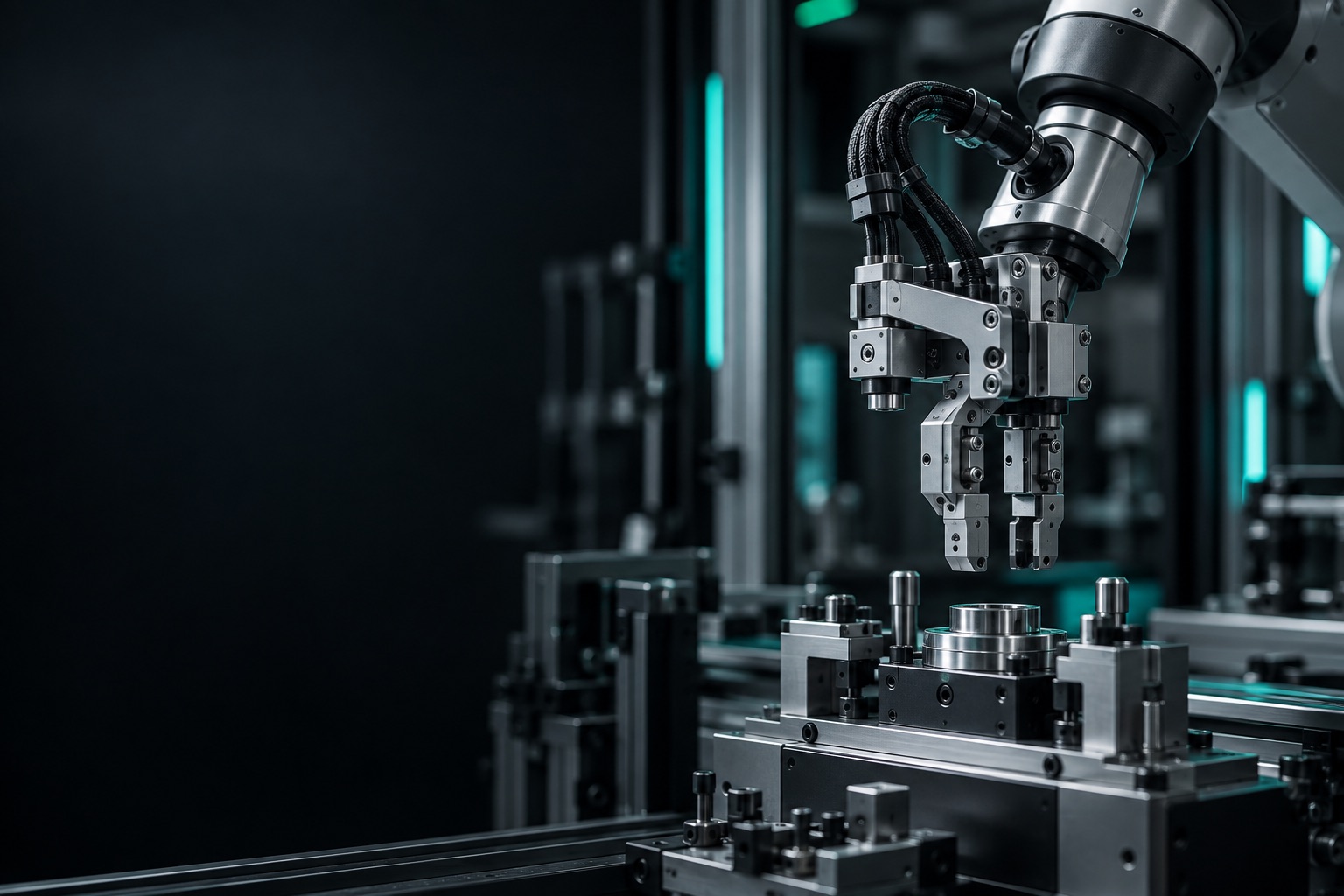
Brackets, end-effectors and housings are reviewed around locating features, motion envelopes and the parts they meet.
 Request a quote
 Robotics & automation manufacturing
Home/Industries/Robotics & Automation
Manufacturing support for end-effectors, brackets, fixtures and system hardware where alignment, load paths, cabling and evolving interfaces need to work together in the real assembly.
Manufacturing with context
Robotics projects compress a lot of requirements into a compact space: mounting faces, repeatability, cable routing, moving clearances and fast design iterations. The strongest RFQs explain the component’s relationship to the larger system as well as its standalone geometry.
What stays in view
Brackets, end-effectors and housings are reviewed around locating features, motion envelopes and the parts they meet.
CNC, sheet metal and 3D printing can serve different stages of an automation build, from quick fit trials to repeat components.
Load-bearing, alignment, threaded and cosmetic requirements are identified before the order moves into manufacture.
Typical applications
A simple assembly image or mating-part reference can be as useful as the part drawing when an interface is difficult to describe in isolation.
Discuss your componentRequirements at RFQ stage
From drawing to decision
Provide the component drawing and enough context to understand what it connects to.
Identify fits, clearances, alignment points and features that carry load or motion.
Tell us whether the part is for a fast trial, a fixture or a repeat system component.
The selected process, material and inspection scope are confirmed before release.
Your next project
Share the current revision, material, quantity, delivery target and the requirements that matter for your application. We’ll review the information before responding.
READY TO QUOTE